
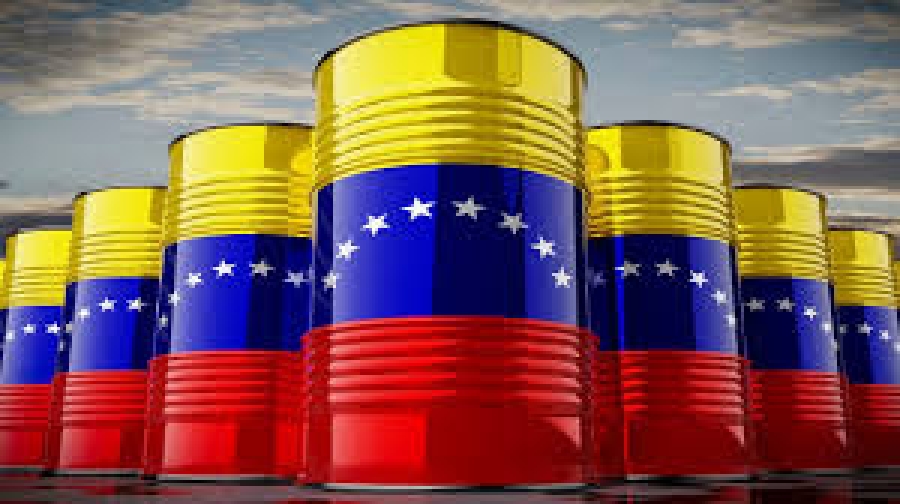
Following the dramatic seizure of Venezuelan President Nicolás Maduro on January 3, 2026, Trump’s comments about taking control of Venezuela’s oil industry quickly triggered accusations of “neo-imperialism”. Critics argued that pledges to share profits with Venezuela were little more than cover to protect the interests of America’s major oil companies. Yet despite the allure of Venezuela’s reserves, many of those major oil firms have been notably cautious, citing uncertainty over the country’s political trajectory and the durability of legal and financial protections.
Venezuela sits atop more than 300 billion barrels of proven crude reserves, constituting roughly 17 percent of the global total. This is more than Saudi Arabia’s reserves, which is the world’s most recognizable oil power. The two countries have comparable population sizes, yet Saudi citizens rank among the wealthiest in the world, while Venezuela has become one of the poorest countries in the Americas.
The contrast can be partly explained by geology. Most Venezuelan oil is considered heavy and sour, meaning it is dense and high in sulfur. Extracting, transporting, and refining this oil is more expensive and technically demanding than the Saudis’ light, sweet crude, which flows more easily and requires less processing.
Saudi Arabia’s oil is also easier to access. Much of it lies close to the surface and on land, lowering extraction costs. Venezuela’s deposits are, meanwhile, often deep underground or offshore, complicating extraction and transportation.
Despite these constraints, Venezuela was one of the world’s leading oil producers by the mid-20th century and a major supplier to the United States. Oil revenues supported a relatively prosperous, urbanized society, and following the leverage gained by producer states after the 1973 oil shock, there was both elite and public support for greater national control over the industry. In 1976, the Venezuelan government nationalized the oil industry, creating Petróleos de Venezuela, S.A. (PDVSA).
The nationalization process was orderly, with U.S. and European oil companies compensated and the transition carefully negotiated. For years afterward, PDVSA operated with significant autonomy and technical competence, maintaining ties with foreign firms and continuing to develop its industry.
The politicization of PDVSA, however, proved fatal for it. After a period of market opening in the 1990s, Hugo Chávez was elected as the president of Venezuela in 1998 on a platform built around redistributing oil wealth and reasserting state control over the economy, particularly the oil sector. He quickly consolidated political control over PDVSA, and after a wave of labor strikes in 2002–2003, his government replaced roughly 20,000 experienced workers with political loyalists who often lacked the technical expertise and skills needed to do the job.
From that point, PDVSA increasingly functioned as a fiscal arm of the state. Political decisions overrode commercial logic, and revenues were diverted away from maintenance and reinvestment toward social programs and short-term spending.
Unlike the 1976 nationalization, Chavez’s approach rewrote established agreements, undermining foreign confidence and operations. Western energy companies reduced their exposure or exited altogether, taking capital, technology, and expertise with them. This was especially damaging because U.S. Gulf Coast refineries were uniquely suited to process heavy crude, having adapted to it over decades. American refiners replaced Venezuelan oil with Canadian heavy crude and domestic shale production, weakening Venezuela’s most natural export market.
During the oil boom of the 2000s, this appeared sustainable, with the country’s per capita income rebounding and Chavez’s social programs winning broad popular support. However, the policies also steadily hollowed out the oil industry’s capacity, while hundreds of thousands of the country’s skilled workers emigrated. The “oil strikes” in Venezuela to overthrow Chavez in 2002 and 2003 led to the country facing large layoffs in PDVSA. “This was the beginning of the large brain drain in Venezuela when many highly skilled industry workers left their home country to work for multinational corporations like ExxonMobil and Chevron,” according to the Borgen Project
Political conditions worsened sharply in the 2010s, as Venezuela drifted further toward Moscow and Beijing. After Maduro took office in 2013 following Chavez’s death, the U.S., under former President Obama, began targeting Venezuelan officials with sanctions in 2015. The sanctions later expanded under Trump to reduce PDVSA’s access to financial markets, insurance, spare parts, and technology. Cut off from the West, Venezuela leaned more heavily on China and Russia, often accepting discounted deals that provided short-term liquidity but little long-term investment or capacity expansion.
When oil revenues collapsed mid-decade, the government resorted to money printing to cover deficits, fueling hyperinflation in the late 2010s that wiped out savings, wages and purchasing power. Strict currency controls also required export earnings to be converted at artificial exchange rates and deprived PDVSA of dollars. With demand from China and other countries never replacing that of the United States, Venezuela’s oil industry was effectively cannibalized to sustain the state. “Until 2017–2018, national access to international wealth was subsidized at the expense of PDVSA’s viability. Since then, through monetized credit from the Central Bank and the reorientation of the exchange rate policy, an attempt is being made to save the oil company at the cost of an abrupt internal adjustment,” stated a 2025 study in the journal Resources Policy.
Venezuela’s deterioration shows the limits of relying on large oil reserves. “Proved” reserves only count what is economically recoverable under current prices and technology. Venezuela’s reported total oil reserves soared from roughly 80 billion barrels in 2005 to more than 300 billion by 2014 largely because higher prices made more of its oil viable to extract. Both Saudi Arabia and Venezuela (as well as many major producers) restrict independent verification of their reserve figures. Venezuela is also an example of why resource management matters just as much as quantity.
Saudi Arabia nonetheless has taken a markedly different path from Venezuela over the last few decades. Its state oil company, Saudi Aramco, remained insulated from short-term political demands and internal disputes, and consistently reinvested in capacity, maintenance, and technological upgrades. By prioritizing reliability and indispensability, the company has maintained relations with its traditional partners, as well as diversified its customer base by targeting major emerging economies.
Partial privatization of Saudi Aramco in the 2020s further reinforced investor confidence. And aside from periodic tensions with the Houthis in neighboring Yemen, which have now eased, Saudi foreign policy has avoided geopolitical confrontations that might threaten its revenues.
Macro policy has played a role as well. Saudi Arabia has been an integral figure in the informal dollar-linked system known as the petrodollar, which guaranteed steady oil exports and dollar inflows while earning Washington’s protection in return for reliable supplies. A large sovereign wealth fund, fiscal buffers, and a commitment to long-term planning have helped the kingdom weather oil price drops without letting production fall apart.
The Future of Venezuela’s Oil Reserves
By the time of the Maduro raid, Venezuela’s oil infrastructure was in advanced decay for years. Refineries are operating at under 20 percent capacity due to equipment failures, power shortages, and lack of feedstock. Pipelines have corroded, storage tanks have failed, and production has collapsed from 3.5 million barrels per day in 1970 to less than 1 million per day by 2025.
The Trump administration’s actions could revive Venezuela’s oil industry, but only if the government cedes control to American companies, which will reduce profits for Venezuela. After seizing Maduro, Trump announced plans to invite American firms back to rehabilitate infrastructure and raise output. Major American refiners with heavy crude processing facilities, including Gulf Coast facilities operated by Phillips 66, have indicated they could process Venezuelan oil again.
While Venezuelans aspire to the wealth of the Saudis and Trump has provided them with a possible opening, any optimism should be cautious. Rebuilding Venezuela’s oil sector after decades of neglect would require stable legal frameworks and political stability, as well as hundreds of billions of dollars over the next decade or more, which helps explain the apprehension of American oil companies to reenter the country.
The global market environment is also less favorable than in the past. The U.S. has been a net oil exporter since 2020, reducing Venezuela’s chance to underpin recovery on its historical market. Europe continues to cut oil consumption, while a global oil glut further limits profitability.
Where Venezuelan oil may matter most is geopolitically. A meaningful rise in production could help suppress global prices, putting pressure on Russian energy revenues. Washington’s recent seizures of tankers carrying Venezuelan oil—tied to disrupting the shadow fleet used by Venezuela, Russia, and Iran to transport crude while avoiding sanctions—demonstrate how control of oil flows is an increasingly common strategy for the Trump administration. A more cooperative Venezuela could strengthen America’s hand, with some potential benefits for Caracas, such as sanctions relief and foreign investment.
Venezuela’s reserves alone, even with U.S. assistance, won’t be enough to save its economy. But given its lack of immediate alternatives, restoring some degree of functionality to its oil sector may still offer limited relief. The contrast with Saudi Arabia shows that oil export dependency does not inevitably doom a country, but it has to be backed by strong institutions and disciplined long-term planning, otherwise resource wealth can quickly evaporate. Saudi Arabia’s Vision 2030 initiative is already expanding non-oil growth and reducing dependence on hydrocarbons, showing a country actively managing the resource curse while Venezuela contemplates the struggle of repairing what it once had.
Author Bio: John P. Ruehl is an Australian-American journalist living in Washington, D.C., and a world affairs correspondent for the Independent Media Institute.
He is a contributor to several foreign affairs publications, and his book, Budget Superpower: How Russia Challenges the West With an Economy Smaller Than Texas’, was published in December 2022.
Source: Independent Media Institute
Credit Line: This article was produced by Economy for All, a project of the Independent Media Institute.
Tags: South America/Venezuela, Politics, Economy, North America/United States of America, Middle East/Saudi Arabia, Europe/Russia, Europe/China, Trade, News, Time-Sensitive, Opinion